
Monthly Archives: May 2017

Floor Tile Grout

What’s the Difference Between Floor Tile Grout and Thinset?

Floor tile grout and thinset are two essential components of any tiled floor or surface in a home or a business. Both of these elements require professional care to install and remove, and the contractor’s use of both materials can affect both of these processes. So, what’s the difference between the two, how do they work, and what’s the best option for a flooring project?

What Thinset and Floor Tile Grout are Used For

When a contractor installs a new tile floor, the first priority is ensuring that they can begin working on a smooth, flat surface with no cracks or holes in it. The flooring of a home or business is an essential part of the entire structure and will likely face lots of wear and tear over the years. For these reasons, it’s important to have a good foundation on which to lay new tile, whether it’s porcelain, slate, or something different.

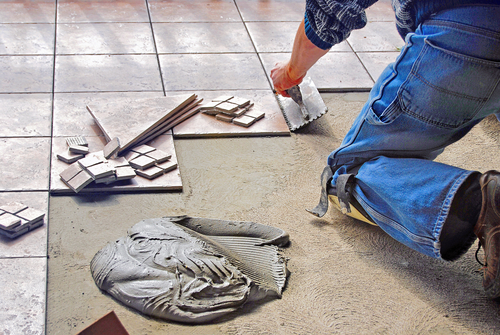
During the floor removal process, after the tile is demolished, it’s vital that the levels below the tile be ground down to a smooth and flat surface so that new flooring materials can be laid. The layer underneath the tile and above the foundational floor structure is referred to as “thinset.” This material is also known as mortar. This is the material that adheres the tile flooring to the floor itself. Unlike floor tile grout, this layer is generally not visible to the eye and sits underneath the tile covering.

Thinset is a strong adhesive material that attaches tile to a surface made of cement or concrete. Generally, cement or concrete is the foundational material below any type of flooring, so thinset is very commonly used in the installation of any form of tile flooring. Thinset is made of cement, fine sand, and a material that absorbs and retains water, such as a cellulose derivative. This material is functional rather than aesthetic, and it is not used as a design element but rather as a construction element, to hold the tile flooring to the foundation surface. Handling of thinset requires product knowledge and experience and should only be done by a professional.

In contrast to thinset, floor tile grout is both aesthetic and functional. Floor tile grout is a type of material used to fill the spaces between individual tiles. It smooths over these spaces to create a flat and functional surface, but it is also visible in the finished floor. Therefore, different types of floor tile grout can be chosen depending on the owner’s design preferences as well as the type of tile being used in the flooring.

Types of Floor Tile Grout

As opposed to thinset, floor tile grout affords people the chance to select the color they wish to use. Thinset is not visible once it’s installed, while floor tile grout is visible between tiles. Clients have the option of choosing from a variety of colors in order to match the tile they have selected.

Floor tile grout can contain sand, or finely ground silica, as well as come in sandless forms. It is generally made of a mixture of cement, water, and various binding and reinforcing agents like polymer and latex. It is generally thinner than thinset to allow for easy pouring between tiles, and when mixed correctly, should provide a waterproof seal between individual tiles.

Floor tile grout can be selected for color as well as variety, based on the style and the sealing properties a client wishes to have in their floor.

Removing Floor Tile Grout and Thinset

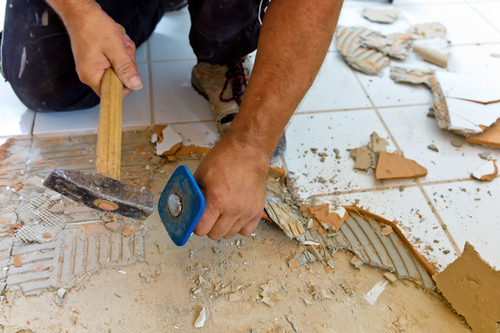
Despite their different purposes, floor tile grout and thinset are composed of some of the same materials, including corrosive elements like sand and cement. These materials are necessary to make thinset and floor tile grout strong enough to hold up to years of wear and tear on flooring. However, when tile flooring is removed, the demolition of these materials can release these elements into the air, posing a health hazard. During floor removal, floor tile grout and thinset is chipped by jackhammers and then ground down by industrial floor grinders. This creates a fine dust that can be hazardous to residents of the structure. It can also potentially damage furniture and result in the need for a time-consuming clean-up process after floor removal.

Fortunately, the Dustbusters system employs industrial vacuums that eliminate the dust created by grout and thinset before it ever reaches the air. This reduces the hazard of health issues created by dust, protects furniture and surfaces from damage, and eliminates the need for a labor-intensive clean-up. If you need flooring removed without all the dangers and inconveniences of dust output, call Dustbusters today at 866-883-8783.
The Ins and Outs of Removing Thinset Cement

The Ins and Outs of Removing Thinset Cement

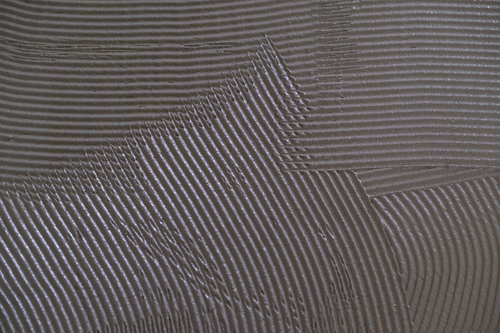
Thinset, or more commonly referred to as drybond mortar, dryset mortar, or mud, is an adhesive used in installing tile or stone flooring. Before any new flooring project can commence, thinset cement is the last thing that needs to be removed from a surface. Usually applied to cement or concrete surfaces before flooring installation, thinset cement is what holds flooring into place so that it can be applied to the ground surface for many years to come. Because it’s an adhesive, it is the last layer that needs removal during the removal process and the most challenging to remove.

Why Does Thinset Need to be Installed?

Before the days of thinset cement, tile and stone flooring was laid directly onto wet cement. This process worked, but the end result was tiling that was not as secure or resistant to elements. For more sturdy and longer-lasting tile laying, thinset cement was used and is still the go-to adhesive for tiling and stone flooring today.

Removal of Thinset Cement

Because the floor surface needs to be completely level for new flooring to be installed, thinset cement needs to be removed entirely. For the average Joe, this process by hand can take days. With the right tools and materials, it can be done safely and effectively. Dustbusters removes thinset cement with innovative technologies that not only quickly and precisely remove thinset, but also suck up any debris and dust that the thinset gives off upon demolition. Although you may think that injury caused by manual demolition may be a cause for safety concern when it comes to removing thinset cement, construction dust is the number one safety hazard throughout the process. Construction dust can lead to numerous health issues and remain floating around in the air for weeks if not thoroughly cleaned. Only expert machinery and professionals can make sure that your thinset cement is removed completely, safely, and precisely!

How Dustbusters Can Help with Thinset Cement Removal

If you are considering removing tile or stone, you will need to consider also removing the thinset cement solution that was used to install the flooring. If you are unsure of the process, or just simply do not want to give up the resources, time, and energy, Dustbusters can help! Most of our flooring removal projects can be completed within one day. Whether the job is industrial or residential, we offer a no-dust solution to flooring removal of any kind. Save your hard work for another project and another day, and let us boost the scheduling on your floor renovation by getting the floor removal step off your plate!

Ready to receive a free, no-obligation quote for our services? Visit our website or give us a call today at 866-883-8783 to speak with a qualified floor removal specialist!


Floor Tile Removal

The Floor Tile Removal Process at Dustbusters

Floor tile removal can be a messy, time-consuming process that results in labor-heavy clean-ups that can last for months. With a traditional floor tile removal process, a lot of dust and debris is created as the original flooring is demolished and removed. This dust can health hazards and can be a nuisance to clean up. It also has the potential to damage furniture and other property. Needless to say, traditional floor tile removal is a serious undertaking. However, at Dustbusters, we offer a dust-free floor tile removal service that can eliminate some of these concerns. Here’s how it works:

A Unique Floor Tile Removal Process

Usually, floor tile is removed using heavy equipment such as jackhammers and grinders, which leave a smooth, finished surface but result in a lot of dust and debris byproduct. A dust-free process implements the same tools and general techniques, but there is an added technology that eliminates those harmful and messy byproducts. With our dust-free tile removal process, the project involves the following steps:

-Assessment: a team of professionals begins by assessing the project and providing an estimate. Different types of flooring can cause the time and expense of any given project to vary, but generally, a commercial or residential project can take as little as 24 hours to complete- without all the cleanup afterward.

-Property Protection: Although a dust-free tile removal process eliminates most of the risk of a messy clean-up and damage, we take a few extra steps to make the project as stress-free as possible. All of the furniture and surrounding surfaces in the room are covered in a protective plastic material to further reduce the risk of damage or messiness.

-Removal: At this step, industrial jackhammers are used to demolish the original flooring. However, unlike with a traditional process, a vacuum is attached to the point of the contact of the jackhammer. The result is that every particle of dust is immediately sucked out of the environment and removed before it ever has a chance to reach the air- and the client’s property and breathing space. This is what eliminates the mess, the need for clean-up, and the health hazards posed by dust particles. Every square foot of tile can produce up to a pound of dust, but with this process, it’s all taken care of before it impacts the surrounding environment.

-Grinding/Finishing: Once the tile is removed, the remaining surface and thin-set are ground down and finished to create a smooth, even surface that is ready for a new flooring installation. During this time, dust and debris are also removed through vacuums as well as manual labor.

-Cleanup/Hauling/Removal: Although the exclusive vacuum technology used in this type of tile removal process eliminates most of the dust, with any construction project, there are always materials to be cleaned up and removed afterward. This is where Dustbusters also differs from the competition. We provide our own dumpsters and take care of every aspect of the clean-up and removal of the byproducts of the process. This eliminates dumping and hauling fees as well as time-consuming cleaning- ultimately, it saves you money that can be spent on a brand new floor, or whatever other project you want to invest in!

Benefits of Dust-Free Floor Tile Removal

There are multiple benefits of investing a dust-free floor tile removal process. This option can be physically and financially beneficial to the client, and can also reduce some of the stress associated with a construction project. Dust-free floor tile removal has the following benefits:

-It eliminates the health hazards caused by dust, including a higher risk of COPD, emphysema, cancer, asthmatic attacks, and scarring of the lungs.

-It reduces the cost of the process through eliminating clean-up fees, potential damage to property (including furniture), and providing a cleaner surface for installation (resulting in a less expensive installation by reducing set-up and preparation time.)

-It relieves some of the stress caused by a big project. Whether residential or commercial, floor removal can be time-consuming. Without having to worry about health risks, damage, or cleaning up, some of this stress is taken off the client’s shoulders.

-It’s less disruptive to the client. Traditionally, businesses and private homes have to be vacated for floor removal due to the health hazards associated with dust. With dust-free floor tile removal, families can stay in their homes and businesses can keep operating, resulting in less upheaval for everyone.

If you’re interested in a professional, less expensive, and higher quality floor tile removal process, call Dustbusters today at 866-883-8783.