
Monthly Archives: December 2017

Quick Cleaning Tips for All Different Types of Flooring

Quick Cleaning Tips for All Types of Flooring

Floors see all types of wear and tear. They literally get walked all over. And, no one wants to show off a home with dirty flooring. No matter if you have carpets, tile, or hardwood, with time, there will be routine maintenance needed to keep them looking nice and clean. To help you keep flooring looking nice and clean year-round, we’ve come up with a few quick cleaning tips to help with all types of flooring.

Quick Cleaning Tips for Hardwood Flooring

Hardwood flooring is beautiful, yet expensive. So, if you come across stains or marks, don’t fret. There are a few quick cleaning tips to help you get your flooring back to the same beautiful state it was when it was first installed.

Permanent Marker: For families with kids, this trick is one that should be remembered for years. If you find any permanent marker marks on your flooring, don’t start purchasing area rugs just yet. Instead, take a damp cloth with a dollop of toothpaste to the area. Move in a circular motion until marks have come up.

Water Marks: This is one of the most common stain types seen on hardwood flooring. When water sets on wood, it can expand and even change the appearance of color, resulting in a greyish-white spot. To address these marks, take a dry cotton rag and iron the spot with a clothing iron. Then, dab the area with a new cloth dipped in denatured alcohol.

Other Stains: For stains which aren’t caused by permanent marker or water on hardwood floors, hydrogen peroxide does the trick. Wet a cloth with the substance and place on the marked area for about 5 minutes. This helps to draw the stain out and soak into the cloth instead.

Quick Cleaning Tips for Carpeting

Carpeting can hold moisture, making it a constant battleground for you and stains. But, there are a few quick cleaning tips to help you keep your carpeting for many more years to come.

Red Wine: Stains on lighter colored carpets from red wine may seem like a carpet owner’s worst fear. But, there is something you can do about them. The first thing anyone should do if they spill red wine on carpeting is to immediately address the problem. First, use a white wine to water the red wine down and make soaking the moisture up easier. Then, use a rag or sponge to try to get all the moisture you can from the carpeting. Once you’ve gotten all you can from the carpet, sprinkle salt over the affected area to soak up more as the carpet dries.

Dark Spots: Other stain issues with carpeting can be addressed with a mixture of salt and white vinegar. Pour the concoction over the stain and let soak before attempting to take the stain up with a cloth or a sponge.

Quick Cleaning Tips for Tile and Stone

While stone and tile flooring is more easy to keep clean as they don’t hold moisture as much as hardwood or carpeting, there are some instances you’ll need some quick cleaning tips to help with maintenance.

Gum: One problem tile or stone owners may come across is gum. To address gum on flooring, try loosening the sticky substance by placing an ice cube over the area. This hardens gum, making it easier to remove with a razor blade or scraper.

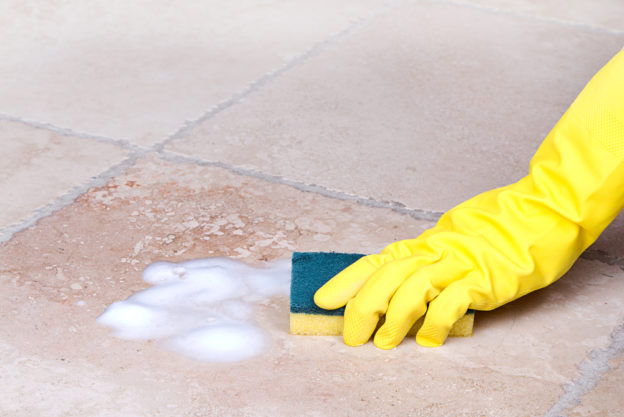
Grout: Undoubtedly, one of the biggest hassles of owning tile is keeping grout looking fresh. To get a new, clean look on grout, mix lemon juice and shaving cream in a spray bottle. Spray the grout and allow to sit for about 10 minutes. Then, go around and scrub the mixture into the grout with an old toothbrush before wiping up with a wet rag.

Out with the Old and in with the New

If you can’t seem to find that anything works with maintaining a better appearance of flooring, it may be time to invest in new flooring. Here at Dustbusters Floor Removal, we can help you get rid of your flooring in a day! And, when we’re done, your new floor will immediately be ready for install! To learn more about the process of floor removal and all involved with our services, visit our website or give us a call today at 866-883-8783.
Your Basic Guide to Do it Yourself Floor Demolition

Your Basic Guide to Do it Yourself Floor Demolition

A new floor can change the entire look of a home. It’s one of the most important design elements of a building. Flooring is a necessity. And, it’s one design aspect of your home which is used in each and every room. For those living in a home which flooring they neither like nor feel comfortable with, renovation is always an option. If you’re considering renovating your home flooring, but don’t want to spend the money on floor demolition, there is a lot to learn. So, to help those who wish to remodel flooring on their own, we’ve come up with this go-to guide for do-it-yourself floor demolition.

DIY Floor Demolition and Remodel Step #1: Remove Fixtures and Appliances

If you’re demolishing tile, you’ll need to remove anything which rests on top of the tile surface before floor demolition can begin. Otherwise, appliances and/or fixtures may be damaged during demolition. To remove toilets and sinks, first shut off the access to water so no flooding occurs. Then, if removing a toilet, expel any water still within the bowl or resevoir. Finally, unscrew bolts, lift the fixture with care, and place in a safe spot until new flooring installation is complete.

Remember, if you have baseboards which are applied on top of tiling, you may need to remove them before floor demolition. Damaging baseboards is almost a guarantee when removing tile if they aren’t removed first. To remove baseboards quickly and effectively, insert end of crowbar into top seam of baseboard and use wall as leverage to rip both board and nail from drywall. It’s easy to damage drywall if you aren’t careful. So, if you’ve never done it before, have a handy friend help or seek professional services.

Floor Demolition Step #2: Choose a Spot to Begin

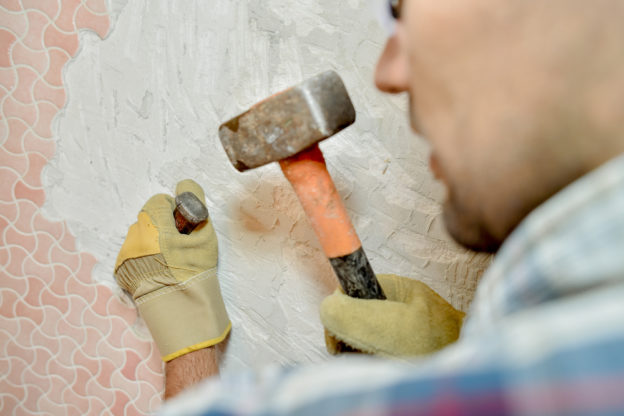
Before you jump right into demolition, you’ll need to choose a starting point. It’s best to start from one corner and end up on the other side of the room. That way, you only have one area you’re working on at all times and there is less confusion. Once you’ve chosen a spot to start, don’t forget to put your protective gear on(eyewear, gloves, knee pads, face mask). Using a chisel and hammer, carefully begin to remove tiling. As you go, throw away chipped, broken, and removed tile so that clean up is happening as you progress with removal and you won’t have to go back to pick up large, heavy piles of tile.

Floor Demolition Step #3: Repairing Subflooring

If the tile your demolishing wasn’t installed directly onto concrete, there is a big risk that you’ll damage some of the subfloor or underlayment of your tile. So, once tile is removed, you’ll need to check for holes, chips, and uneven surfaces. You won’t be able to apply new flooring until subflooring is prepared and ready to go. So, either repair or replace subflooring where needed before considering flooring installation.

Floor Demolition Step #4: Cleaning Subflooring for Installation

Before you can regrout for tile or install another kind of flooring, the subflooring you’ll install onto needs to be perfectly clean. Nails, glue, and debris can all cause uneven surfaces, so they have to be removed prior to installation. Additionally, subflooring must be swept and removed of any dust, which may seem virtually impossible after tile removal. If there is dust, new glue or other adhesives may not work as they need to in the installation of your new flooring. Removing tile comes with heaps of dust which may take days to settle. So, cleanup may take up to a week or two.

Skipping the Hassel and Going with the Professionals

All in all, floor demolition is a big job. It’s easy to assume that it’s a quick and simple process. And, while it’s not rocket science, it’s not something that’s easy, fun, or quick. Most people understand the time, energy, risk, and work which comes with floor demolition, so they understand that DIY floor removal may not be the best option. Furthermore, when it comes to the risk to damaging subfloor, repair, mistakes, and renting of proper disposal units (which is mandatory in most states) that comes with most DIY floor removal jobs, it’s not even the most cost-efficient option.

So, instead of planning for the hassle that DIY floor removal will inevitably cause you, consider the experts at Dustbusters Floor Removal. We’ll take care of the entire process, from start to finish, and you won’t have to lift a finger!

Weighing the Pros and Cons of Bamboo and Cork Flooring

Weighing the Pros and Cons of Bamboo and Cork Flooring

Bamboo and cork flooring are beginning to be the go to choice for residential flooring options for a number of reasons. If you’re thinking of redoing your flooring at home and love the look of wood floors but don’t like their negative drawbacks, considering bamboo and cork flooring is a great idea. Find out if these options are right for your by weighing the pros and cons first.

The Pros of Bamboo and Cork Flooring

Obviously, the pros of both bamboo and cork flooring are the reason for the mass increase in the purchasing of these options. There are many benefits these two type of flooring choices offer, and they’re the same pros for both options. The benefits of choosing both bamboo and cork flooring include:

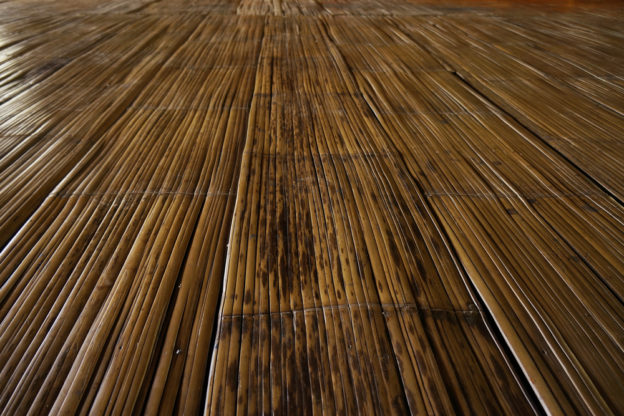
Eco-Friendly: There’s no question that compared to wood floors, cork and bamboo floors are more eco-friendly. Real wood floors are taken from a number of types of trees like oak, maple, and mahogany. The problem is that more people want wood flooring options than there are trees. But, bamboo and cork provide an alternative beautiful flooring solution which offer the same benefits wood floors do without harming the environment. On one hand, cork is developed from the bark of a cork tree. But, taking this bark is only done once every 10 years and doesn’t do any harm to the tree. One the other hand, bamboo is a special type of fast-growing grass which can be easily grown and harvested over and over.

Adaptable to Environment: In some areas, wood flooring isn’t available due to changes in weather annually. Extreme changes with weather like air humidity can cause wood to expand, crack, and warp. But, bamboo and cork flooring seem to be more adaptable to these weather conditions.

Clean Up: Carpeting can hold in moisture, making it at risk for stains. Tile floors show dirt faster and may need more frequent mopping. But, both bamboo and cork flooring offer super easy clean up. Just a sweet, dust mop, or mop with simply water will help to clean up any debris or spilt liquid in a flash.

The Cons of Cork Flooring

Moisture: Cork can hold water so it’s necessary to seal it. With proper sealant, cork floors can be waterproof, making them a great flooring solution for your bathroom or kitchen. But, if you don’t stay up to date on resealing when needed, they could become damaged. Many may not like the fact that resealing cork floors could come into play in the future.

Looks: When it comes to cork flooring, you either like it or you don’t. While it may be something you love and wish to invest into because of your specific taste, the next buyer of your home may not think the same way. So, if you are preparing your home for resale, the look of cork flooring may not intrigue all of your potential buyers.

The Cons of Bamboo Flooring

Rating of Quality: Bamboo flooring is a pretty new concept in the home design realm still. So, many manufacturers haven’t done the research needed to conduct a scale of quality for these products. Basically, all you have to go on is price. And, bamboo flooring isn’t cheap ($4-8 per foot). So, you’re best bet to choosing the highest quality bamboo flooring is to pay top dollar.

Refinish: Real wood floors provide the option to refinish after a few years of wear and tear. The end result is a cheaper way to renovate flooring. But, bamboo flooring doesn’t provide that option. So, once they’re worn and torn, they need replacing.

Making Way for Your New Bamboo or Cork Flooring

If you think you’re ready to select the flooring option that’s right for your home, you’ll need to remove your old flooring. If you aren’t a professional or haven’t removed flooring before, it’s best to choose a professional service to do so. That way, subflooring, baseboards, and other preservable flooring aspects can be preserved for future use. By choosing Dustbusters for your floor removal services, you’re guaranteed to have floors removed with our innovative, dust-free technology. This way, you’ll be ready for your bamboo or cork floor installation as soon as we’re done! Get a quote for your floor removal services today by calling us at 866-883-8783.