Category Archives: Uncategorized

Floor Tile Grout

What’s the Difference Between Floor Tile Grout and Thinset?

Floor tile grout and thinset are two essential components of any tiled floor or surface in a home or a business. Both of these elements require professional care to install and remove, and the contractor’s use of both materials can affect both of these processes. So, what’s the difference between the two, how do they work, and what’s the best option for a flooring project?

What Thinset and Floor Tile Grout are Used For

When a contractor installs a new tile floor, the first priority is ensuring that they can begin working on a smooth, flat surface with no cracks or holes in it. The flooring of a home or business is an essential part of the entire structure and will likely face lots of wear and tear over the years. For these reasons, it’s important to have a good foundation on which to lay new tile, whether it’s porcelain, slate, or something different.

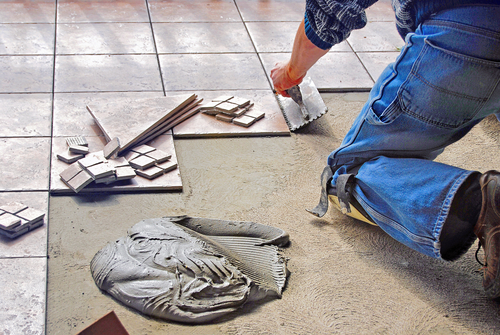
During the floor removal process, after the tile is demolished, it’s vital that the levels below the tile be ground down to a smooth and flat surface so that new flooring materials can be laid. The layer underneath the tile and above the foundational floor structure is referred to as “thinset.” This material is also known as mortar. This is the material that adheres the tile flooring to the floor itself. Unlike floor tile grout, this layer is generally not visible to the eye and sits underneath the tile covering.

Thinset is a strong adhesive material that attaches tile to a surface made of cement or concrete. Generally, cement or concrete is the foundational material below any type of flooring, so thinset is very commonly used in the installation of any form of tile flooring. Thinset is made of cement, fine sand, and a material that absorbs and retains water, such as a cellulose derivative. This material is functional rather than aesthetic, and it is not used as a design element but rather as a construction element, to hold the tile flooring to the foundation surface. Handling of thinset requires product knowledge and experience and should only be done by a professional.

In contrast to thinset, floor tile grout is both aesthetic and functional. Floor tile grout is a type of material used to fill the spaces between individual tiles. It smooths over these spaces to create a flat and functional surface, but it is also visible in the finished floor. Therefore, different types of floor tile grout can be chosen depending on the owner’s design preferences as well as the type of tile being used in the flooring.

Types of Floor Tile Grout

As opposed to thinset, floor tile grout affords people the chance to select the color they wish to use. Thinset is not visible once it’s installed, while floor tile grout is visible between tiles. Clients have the option of choosing from a variety of colors in order to match the tile they have selected.

Floor tile grout can contain sand, or finely ground silica, as well as come in sandless forms. It is generally made of a mixture of cement, water, and various binding and reinforcing agents like polymer and latex. It is generally thinner than thinset to allow for easy pouring between tiles, and when mixed correctly, should provide a waterproof seal between individual tiles.

Floor tile grout can be selected for color as well as variety, based on the style and the sealing properties a client wishes to have in their floor.

Removing Floor Tile Grout and Thinset

Despite their different purposes, floor tile grout and thinset are composed of some of the same materials, including corrosive elements like sand and cement. These materials are necessary to make thinset and floor tile grout strong enough to hold up to years of wear and tear on flooring. However, when tile flooring is removed, the demolition of these materials can release these elements into the air, posing a health hazard. During floor removal, floor tile grout and thinset is chipped by jackhammers and then ground down by industrial floor grinders. This creates a fine dust that can be hazardous to residents of the structure. It can also potentially damage furniture and result in the need for a time-consuming clean-up process after floor removal.

Fortunately, the Dustbusters system employs industrial vacuums that eliminate the dust created by grout and thinset before it ever reaches the air. This reduces the hazard of health issues created by dust, protects furniture and surfaces from damage, and eliminates the need for a labor-intensive clean-up. If you need flooring removed without all the dangers and inconveniences of dust output, call Dustbusters today at 866-883-8783.
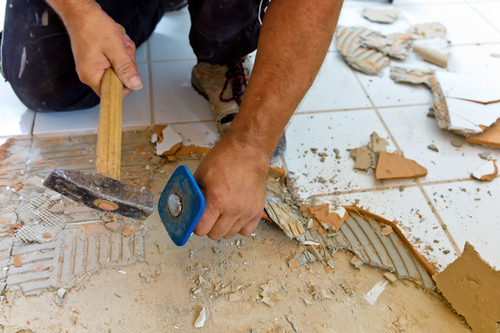
The Ins and Outs of Removing Thinset Cement

The Ins and Outs of Removing Thinset Cement

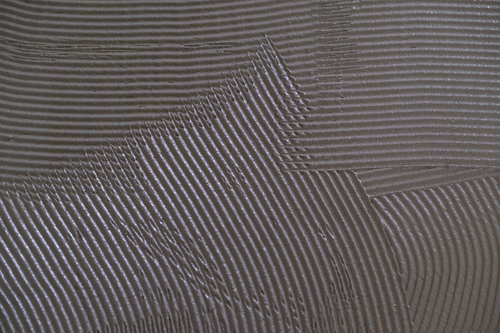
Thinset, or more commonly referred to as drybond mortar, dryset mortar, or mud, is an adhesive used in installing tile or stone flooring. Before any new flooring project can commence, thinset cement is the last thing that needs to be removed from a surface. Usually applied to cement or concrete surfaces before flooring installation, thinset cement is what holds flooring into place so that it can be applied to the ground surface for many years to come. Because it’s an adhesive, it is the last layer that needs removal during the removal process and the most challenging to remove.

Why Does Thinset Need to be Installed?

Before the days of thinset cement, tile and stone flooring was laid directly onto wet cement. This process worked, but the end result was tiling that was not as secure or resistant to elements. For more sturdy and longer-lasting tile laying, thinset cement was used and is still the go-to adhesive for tiling and stone flooring today.

Removal of Thinset Cement

Because the floor surface needs to be completely level for new flooring to be installed, thinset cement needs to be removed entirely. For the average Joe, this process by hand can take days. With the right tools and materials, it can be done safely and effectively. Dustbusters removes thinset cement with innovative technologies that not only quickly and precisely remove thinset, but also suck up any debris and dust that the thinset gives off upon demolition. Although you may think that injury caused by manual demolition may be a cause for safety concern when it comes to removing thinset cement, construction dust is the number one safety hazard throughout the process. Construction dust can lead to numerous health issues and remain floating around in the air for weeks if not thoroughly cleaned. Only expert machinery and professionals can make sure that your thinset cement is removed completely, safely, and precisely!

How Dustbusters Can Help with Thinset Cement Removal

If you are considering removing tile or stone, you will need to consider also removing the thinset cement solution that was used to install the flooring. If you are unsure of the process, or just simply do not want to give up the resources, time, and energy, Dustbusters can help! Most of our flooring removal projects can be completed within one day. Whether the job is industrial or residential, we offer a no-dust solution to flooring removal of any kind. Save your hard work for another project and another day, and let us boost the scheduling on your floor renovation by getting the floor removal step off your plate!

Ready to receive a free, no-obligation quote for our services? Visit our website or give us a call today at 866-883-8783 to speak with a qualified floor removal specialist!


Floor Tile Removal

The Floor Tile Removal Process at Dustbusters

Floor tile removal can be a messy, time-consuming process that results in labor-heavy clean-ups that can last for months. With a traditional floor tile removal process, a lot of dust and debris is created as the original flooring is demolished and removed. This dust can health hazards and can be a nuisance to clean up. It also has the potential to damage furniture and other property. Needless to say, traditional floor tile removal is a serious undertaking. However, at Dustbusters, we offer a dust-free floor tile removal service that can eliminate some of these concerns. Here’s how it works:

A Unique Floor Tile Removal Process

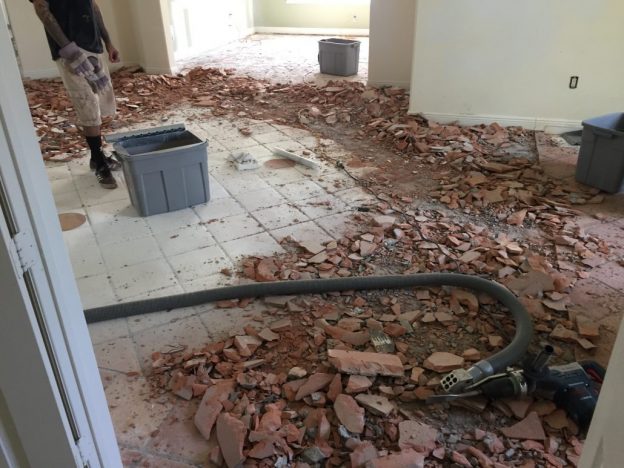
Usually, floor tile is removed using heavy equipment such as jackhammers and grinders, which leave a smooth, finished surface but result in a lot of dust and debris byproduct. A dust-free process implements the same tools and general techniques, but there is an added technology that eliminates those harmful and messy byproducts. With our dust-free tile removal process, the project involves the following steps:

-Assessment: a team of professionals begins by assessing the project and providing an estimate. Different types of flooring can cause the time and expense of any given project to vary, but generally, a commercial or residential project can take as little as 24 hours to complete- without all the cleanup afterward.

-Property Protection: Although a dust-free tile removal process eliminates most of the risk of a messy clean-up and damage, we take a few extra steps to make the project as stress-free as possible. All of the furniture and surrounding surfaces in the room are covered in a protective plastic material to further reduce the risk of damage or messiness.

-Removal: At this step, industrial jackhammers are used to demolish the original flooring. However, unlike with a traditional process, a vacuum is attached to the point of the contact of the jackhammer. The result is that every particle of dust is immediately sucked out of the environment and removed before it ever has a chance to reach the air- and the client’s property and breathing space. This is what eliminates the mess, the need for clean-up, and the health hazards posed by dust particles. Every square foot of tile can produce up to a pound of dust, but with this process, it’s all taken care of before it impacts the surrounding environment.

-Grinding/Finishing: Once the tile is removed, the remaining surface and thin-set are ground down and finished to create a smooth, even surface that is ready for a new flooring installation. During this time, dust and debris are also removed through vacuums as well as manual labor.

-Cleanup/Hauling/Removal: Although the exclusive vacuum technology used in this type of tile removal process eliminates most of the dust, with any construction project, there are always materials to be cleaned up and removed afterward. This is where Dustbusters also differs from the competition. We provide our own dumpsters and take care of every aspect of the clean-up and removal of the byproducts of the process. This eliminates dumping and hauling fees as well as time-consuming cleaning- ultimately, it saves you money that can be spent on a brand new floor, or whatever other project you want to invest in!

Benefits of Dust-Free Floor Tile Removal

There are multiple benefits of investing a dust-free floor tile removal process. This option can be physically and financially beneficial to the client, and can also reduce some of the stress associated with a construction project. Dust-free floor tile removal has the following benefits:

-It eliminates the health hazards caused by dust, including a higher risk of COPD, emphysema, cancer, asthmatic attacks, and scarring of the lungs.

-It reduces the cost of the process through eliminating clean-up fees, potential damage to property (including furniture), and providing a cleaner surface for installation (resulting in a less expensive installation by reducing set-up and preparation time.)

-It relieves some of the stress caused by a big project. Whether residential or commercial, floor removal can be time-consuming. Without having to worry about health risks, damage, or cleaning up, some of this stress is taken off the client’s shoulders.

-It’s less disruptive to the client. Traditionally, businesses and private homes have to be vacated for floor removal due to the health hazards associated with dust. With dust-free floor tile removal, families can stay in their homes and businesses can keep operating, resulting in less upheaval for everyone.

If you’re interested in a professional, less expensive, and higher quality floor tile removal process, call Dustbusters today at 866-883-8783.
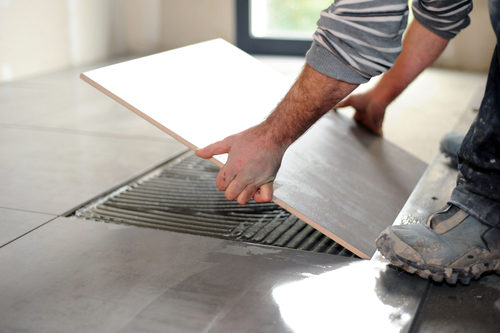
Types of Tile Flooring

A Guide to Different Types of Tile Flooring Options

There are many possibilities of flooring options for a home or a business, and selecting the right one depends on the building structure and its purpose (whether it’s a home or a business) and the personal tastes of the owner. Tile is a popular choice for flooring- it’s beautiful, tasteful, and can often be custom designed. But there are multiple types of tile flooring, each with its various benefits and downsides. When selecting a type for installation or removing a tile floor in order to make room for a new one, it’s important to know your options.

Popular Types of Tile Flooring

There are multiple types of tile flooring, each made of different, unique materials and available in a range of colors and sizes depending on the style. Some of the most popular types are:

Ceramic Tile

One of the oldest materials used in pottery, ceramics are composed of mixtures of clay, talc, silica, carbon, and other nonmetallic elements. These materials are mixed together and fired in a kiln. The high heat causes the materials to harden and solidify, resulting in a range of products, including ceramic tile. This type of tile is popular because it is durable, low maintenance, and very easy to clean. Over time, ceramic tile won’t degrade or become tarnished if it is cared for properly. This makes it a popular choice for a long-lasting floor that is less costly to install and maintain.

Saltillo Tile

Saltillo tile, also known as terra cotta tile, is one of the most distinctive types of tile flooring. This material originated in Saltillo, Mexico. It’s composed of pure, natural clay deposits found in that region of Mexico. These materials are mixed with water, sun-dried, and then kiln-fired to harden the tiles. Terra cotta tiles similar to saltillo are also produced in Italy and Spain. Because the materials used to make saltillo or terra cotta tiles are porous (rather than dense), these tiles absorb liquid and can become damaged or worn easily. It is recommended that these tiles be sealed and polished, and be maintained regularly. Although these types of tile flooring require more intensive care, they are highly prized for their unique, elegant look and rich colors, which range from yellow to deep red.

Porcelain Tile

Porcelain is an ancient building material created in China over 2,000 years ago. It’s usually made from kaolin, a type of clay, but different varieties can contain a wide range of minerals or other earth-derived materials. Today, it’s produced around the world for a wide variety of purposes, including for use in tile. Porcelain tile tends to be more expensive than ceramic and more difficult to install due to its weight. However, it’s a popular choice because it is denser and harder than many forms of ceramic, making it more durable. It also absorbs less water, meaning that it requires less maintenance over time. Porcelain tile can be glazed (to give a shiny, glossy appearance) or be left unglazed, and comes in a range of colors and designs.

Slate Tile

Unlike ceramic, saltillo, or porcelain tile, slate tile is not made from clay. Rather, it comes from cutting and fitting slabs of thin, fine-grained rock that usually forms from compressed sediment and minerals like quartz. The rock is usually extracted from quarries. It’s a great material for tile because it is naturally smooth and thin, making it easy to cut and shape into custom tile formations. Slate tile is popular because it is long-lasting, hard, and resistant to scratches or damage. It also provides an elegant, rustic look in homes and can range in color and patterning based on the natural formation of the rock used.

Travertine Tile

Similarly to slate tile, travertine is not made of clay but rather of a form of rock. Unlike slate, however, travertine comes from limestone, which is usually formed from mineral deposits caused by hot springs. These tiles are usually light in color, ranging from white to tan or cream-colored varieties, but they can also be slightly-dark, even rust colored. Travertine is a less expensive alternative to marble or slate, can come in a range of styles and colors and are relatively easy for installation. They are also sustainable, coming from naturally-occurring stone rather than manufactured materials. The downside of these types of tile flooring is that travertine tiles are porous, absorbent, and easily damaged by certain materials sometimes found in cleaning products.

Removing Tile

No matter their differences in composition, style, or cost, all tiles are difficult and expensive to remove from the home using traditional methods. Also, this process can be extremely hazardous. For every square foot of tile removed, a pound of fine dust is created. When this dust enters the air, it can trigger asthma attacks, damage furniture, create the need for time-consuming clean-ups, and even contribute to chronic and terminal respiratory diseases like lung cancer. However, at Dustbusters Floor Removal, we utilize a process that eliminates the dust output from tile removal. This makes for a safer, quicker, cleaner, and less expensive floor removal process. No matter your preferences with regard to types of tile flooring, if you’re interested in changing your floor surface, Dustbusters is the way to go for the removal portion of the process. Call today at 866-883-8783 for information about consultation and removal.

inhaling dust

Prevent the Dangers of Inhaling Dust With New Floor Removal Methods

Inhaling dust that results from construction projects can cause a host of problems for home or business owners. This is particularly dangerous during the process of floor removal due to the large volume of dust created during these projects. For every square foot of tile that’s demolished and removed, up to a pound of dust is created and released into the air. Inhaling dust from tile or wood floor removal can be dangerous, leading to anything from minor irritation to chronic illnesses.

How Floor Removal Creates Dust

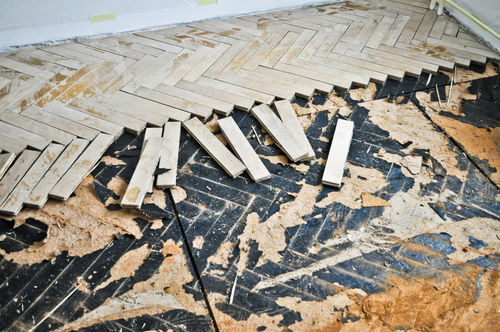
When a tile or wood floor is removed, contracted professionals generally use jackhammers, scrapers, and grinders to chip away at the flooring. Once the tile or wood is removed, the grinders smooth out the surface beneath so that a new floor can be properly installed. This process creates a lot of dust, which can end up in the air inside of the building or on surfaces throughout it. This dust is often primarily made up of materials like silica, a mineral commonly used in tile.

Possible Risks of Inhaling Dust

Inhaling dust from these projects, even in small amounts, can trigger minor allergic reactions as well as potentially fatal diseases. For this reason, with traditional methods of floor removal, the homeowner or staff must vacate their home or place of business until the project is complete. Fortunately, with dust-free floor removal methods, these risks are eliminated, resulting in a safer and more convenient process. These new methods were created to avoid the risks of inhaling dust, including:
-Triggering an asthma attack or making chronic asthma worse
-Triggering symptoms of dust allergies, like a runny nose, congestion, itching, coughing, sneezing, or swelling
-Causing respiratory irritation or illness, like bronchitis
-Silicosis (a condition that damages lung tissue) or fibrosis (scarring of lung tissue), which can lead to long-term breathing problems
-Lung cancer
-Chronic obstructive pulmonary disease (COPD)
Prolonged exposure to dust can lead to long-term damage, and can potentially be fatal. Protecting yourself, your family, or your employees from the hazards of inhaling dust during a floor removal process is essential.

Avoiding the Dangers of Inhaling Dust

In order to prevent the consequences of inhaling dust, it is necessary to cut down on or even eliminate dust output during floor removal. Traditional methods of floor removal involve techniques like chipping and grinding, which produce fine dust particles that can be difficult to remove. Fortunately, there is a solution. Floor removal systems that utilize industrial vacuums at the source of tile or wood removal prevent dust from getting into the surrounding environment by eliminating it before it is released into the air.

This is the best option for getting rid of the dust that is created during floor removal. Not only does this method protect the surfaces and furniture in your home or business from being covered it dust, it protects the health of everyone who spends time in the building. Dust-free floor removal cuts down on the cost and time it takes to prepare a space for the process, protects the property and building from damage, and eliminates the time-consuming clean-up usually associated with floor removal. Most importantly, it allows your family to stay in the home or your business to remain open during floor removal because it protects the health of both the workers and the client. If you need flooring removed, there is no need to put your health or the health of your family or employees at risk. For efficient, professional, and dust-free floor removal, call DustBusters today at 866-883-8783.

ceramic tile removal

Ceramic Tile Removal: What are My Options?

Ceramic tile: a dated classic that may be haunting your home with flashbacks to days when your flooring was actually white. You’re having visions of how spectacular your home would look with a traditional and timeless option like wood or bamboo flooring, but what are you going to do with all of that ceramic tile? Well, you have a few options to getting your home prepared for a new floor installation. You can either attempt to remove the flooring yourself, hire a home labor service, or choose a floor removal specialist like Dustbusters. There are pros and cons to each ceramic tile removal option, and considering all of your options before making a decision may be in your best interest!

DIY Ceramic Tile Removal

The obvious benefit to DIY ceramic tile removal is the savings. But, for someone inexperienced with floor removal, the process is draining and time-consuming. Also, the entire process may be more costly than you may think. For instance, all the tile that you rip up has to go to the trash, but the garbage truck will not pick up demolished ceramic tile. This will cost you the additional fees of hiring a trash related service or help transferring tile to the dump. If you have lots of time, energy, help, and resources removing ceramic tile yourself is possible. But, if you would rather save your back and time, you can invest in either hired labor or professional floor removal.

Hiring a Laborer

If bending over for days scraping, pulling, and hauling ceramic tile doesn’t seem like the ultimate weekend plans, you can always hire laborers to do it for you. Of course, there is still the added cost of disposal fees or the hassle of transferring loads of heavy tile in your vehicle, but you won’t have to do most of the labor yourself. One of the biggest problems with DIY tile removal or hiring laborers to remove tile is the creation of construction dust. Without innovative technology, removing tile secretes pounds of dust into the air that your family, friends, and pets breathe in. This dust contains harmful silica particles that can lead to the development of lung diseases such as cancer. It also is extremely fine, meaning that it takes days or even weeks to fall, giving you a house that requires frequent dusting until all of the dust finally falls to the ground surface from out of the air.

Hiring a Professional Floor Removal Service

If you are looking for the most bang for your buck, consider hiring a professional floor removal service that offers innovative dust-free equipment like Dustbusters. We can get residential projects done in a single day, giving you the time you need to get your project done on time and without the exerted energy of doing it yourself. Our dust-free method of floor removal eliminates the safety hazard dust places on your loved ones and also leaves you with a home that is not filled with dust! Lastly, included in our pricing is flooring removal, so you won’t have to worry about dumpster rental or moving tons of tile to the dump! Ready to get your floors ready for a beautiful new installation? Call us today for a free consultation at  866-883-8783.